Basic 101: The Bold Display Font for Creative Projects
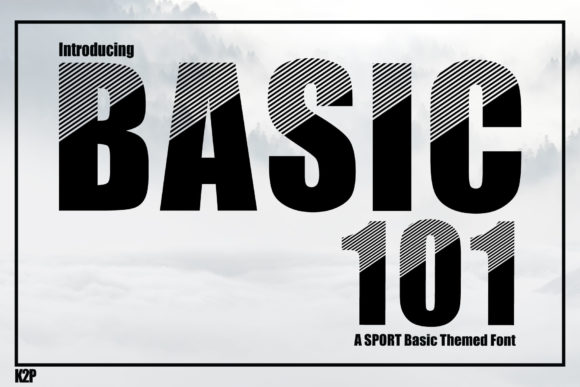
In the world of graphic design and digital content creation, typography is rarely just about readability. It is about voice, attitude, and immediate visual impact. When you need a typeface that commands attention without requiring excessive decoration, Basic 101 emerges as a compelling choice. This thick-lettered display font offers a unique blend of structural integrity and modern flair, making it an ideal tool for creators who want their message to be seen and understood instantly.
Designed with a distinctively bold presence, Basic 101 is not merely a utility; it is a statement. Its thick strokes and unique geometric construction allow it to stand out in crowded feeds, on busy packaging, or in large-format prints. Whether you are a seasoned designer looking for a headline font that holds its own against complex imagery, or a hobbyist creating custom crafts, this font provides a reliable foundation for striking visual communication.
Understanding the Design Philosophy
What makes Basic 101 interesting is its balance between simplicity and character. While many "bold" fonts rely on heavy weight alone to create impact, Basic 101 utilizes specific kerning and letterform modifications to ensure legibility even at small sizes or when used in dense layouts. The term "Basic" might suggest minimalism, but the execution is anything but plain. The letters possess a subtle uniqueness in their curves and angles, giving them a personality that feels both contemporary and timeless.
This font is perfectly suitable for any project because it avoids the pitfalls of overly stylized typefaces that can become dated quickly. Instead, it leans into a robust, confident aesthetic that works across various industries. From tech startups wanting to convey stability to boutique brands seeking a rugged yet polished look, Basic 101 adapts to the context while maintaining its core identity.
Key Characteristics
- Thick Letterforms: The substantial stroke width ensures high visibility and strong contrast against light backgrounds.
- Unique Geometry: Subtle variations in the shapes of standard characters prevent the font from feeling generic or corporate.
- Display-Ready: Optimized for headlines, titles, and short bursts of text rather than long-form body copy.
- Versatile Weight: Its heaviness allows it to function as a graphical element itself, reducing the need for additional borders or shadows.
Creative Applications and Use Cases
The versatility of Basic 101 opens up a wide array of creative possibilities. Because it is a display font, its primary strength lies in grabbing attention. Here is how different professionals can leverage its unique design for maximum effect.
Branding and Logo Design
For entrepreneurs and small business owners, establishing a memorable brand identity is crucial. Basic 101’s thick, confident lines make it an excellent candidate for logo wordmarks. Imagine a coffee shop named "Grounds" using this font; the weight of the letters would evoke the richness of the product, while the unique design adds a touch of artisanal character. Similarly, for fitness brands or outdoor gear companies, the sturdy nature of the font communicates strength and reliability.
When designing logos with Basic 101, consider playing with spacing. Tighter tracking (letter-spacing) can create a solid, unified block of text, which is effective for badges and emblems. Conversely, wider tracking can lend a sense of luxury and breathability, softening the aggressive nature of the thick letters.
Social Media and Digital Marketing
In the fast-scrolling environment of social media, static images must stop the thumb. Marketers and bloggers can use Basic 101 to create eye-catching quote graphics, announcement banners, or promotional thumbnails. The font’s high contrast means it remains readable even when overlaid on busy background images, provided there is sufficient separation between the text and the image elements.
Consider using Basic 101 for key words within a sentence. By isolating a single powerful word—such as "NEW," "SALE," or "FREE"—in Basic 101, you create a focal point that guides the viewer’s eye through the rest of the composition. This technique is particularly effective for email headers and newsletter subject lines where click-through rates depend on instant clarity.
Print and Physical Crafts
For hobbyists and crafters, Basic 101 is a dream come true. Its thick letters are exceptionally easy to cut out, trace, or stencil. If you are creating custom t-shirts, tote bags, or wooden signs, the bold outlines require less precision than fine-script fonts, making it accessible for those using hand-cut methods or simpler cutting machines like Cricut or Silhouette.
Imagine creating a series of layered posters where each letter of Basic 101 is cut from a different colored paper. The thickness of the letters allows for clean edges and sharp overlaps, resulting in a vibrant, pop-art aesthetic. Educators can also use this font for classroom posters, bulletin boards, and educational materials, ensuring that young students can easily recognize and read the text from a distance.
Practical Tips for Implementation
To get the most out of Basic 101, it is important to approach its usage with intention. Here are some practical recommendations to keep your designs clear, effective, and organized.
- Pair with Simplicity: Since Basic 101 is visually loud, pair it with simple, uncluttered backgrounds. Avoid competing patterns or overly intricate illustrations that might clash with the font’s strong geometry.
- Leverage Color Contrast: Use high-contrast color combinations to enhance readability. Black text on white, or bright yellow on navy blue, will make the thick letters pop. Experiment with monochromatic schemes for a more sophisticated, tonal look.
- Limit Usage: As a display font, Basic 101 should not be used for paragraphs of text. Reserve it for headlines, subheads, buttons, and labels. For body copy, choose a highly readable sans-serif or serif font to maintain user comfort.
- Experiment with Scale: Don’t be afraid to go big. The beauty of Basic 101 is revealed when it is scaled up. Let the letters spill off the edges of the canvas or overlap other design elements to create dynamic, magazine-style layouts.
Consistency Across Platforms
One of the challenges of using unique fonts is ensuring they render consistently across different devices and print processes. Before finalizing any project, always preview Basic 101 in its intended medium. On screens, check that the thick strokes do not merge together on smaller mobile displays. In print, verify that the ink density does not cause bleeding on porous papers. By testing these variables early, you can adjust spacing or sizing to ensure the outcome generated is exactly what you envisioned.
Why Choose Basic 101?
Ultimately, the decision to use Basic 101 comes down to the desire for impact and originality. In a market saturated with Helvetica, Arial, and Roboto, a font with a distinct personality helps your work stand out. Basic 101 offers that distinction without sacrificing professionalism. It is a tool that respects the designer’s intent while providing a robust framework for creativity.
Add it confidently to your favorite creations. Whether you are designing a website header, crafting a handmade gift, or putting together a presentation deck, let yourself be amazed by the outcome generated. The thick, unique letters of Basic 101 are ready to elevate your projects from ordinary to extraordinary, proving that sometimes, the boldest choices are the simplest ones.